
Why This Guide Exists
Every year, thousands of players and families ask the same question: where in Europe should I go to develop as a footballer?
Most answers come from marketing. This one doesn’t. Below is an honest breakdown of the six main European destinations for football academies — what each does well, what it doesn’t, and who each one is actually right for.
The 6 Criteria We Use
- Methodology — coaching philosophy and training quality
- Competition access — can you play official, federated matches?
- Access for internationals — visa, legal barriers, language
- Academic integration — can you study while you train?
- Cost vs. value — what do you actually get for your money?
- Professional pathway — real links to professional clubs
🇪🇸 Spain — The Best All-Round Package
Methodology: Positional play, technical first, deeply influenced by La Liga and FC Barcelona’s La Masia. More ball touches per session than almost any other football culture in Europe.
What makes it stand out:
- Deepest league pyramid in Europe — 7 competitive tiers below international football
- International players can compete in official federated leagues from season one
- UEFA PRO licensed coaches as standard, not exception
- Barcelona’s international schools allow genuine dual football-academic careers
- Legal and visa support well-developed for non-EU players
Catalonia specifically:
The Federació Catalana de Futbol runs its own well-structured competitions at every age group. The influence of FC Barcelona’s philosophy permeates down to municipal level. Barcelona is also one of the most liveable, internationally connected cities in Europe — adaptation is faster here than anywhere else on this list.
- Costs: €3,100–5,200/month (full board, training, legal support included)
Best for: Players who want technical development + real competition minutes + academic continuity + a clear professional pathway.
🏴 England — Prestige With Real Barriers
Methodology: Dramatically improved since the EPPP (2012). Premier League academies are world-class. Outside of them, quality drops sharply and physical culture still dominates.
The honest downsides:
- Post-Brexit: EU players now need visas; non-EU players face Governing Body Endorsement requirements
- Independent programs struggle to access meaningful competition
- London/SE accommodation: one of the most expensive in Europe
- Full costs: €4,500–7,000+/month
Best for: Players with a direct connection to a Premier League club structure. Not ideal for independent academy programs.
🇩🇪 Germany — Disciplined, but a Language Wall
Methodology: High intensity, pressing-based, physically rigorous. Bundesliga academies (Nachwuchsleistungszentren) are mandatory and operate to strict standards.
Key Points:
- Strong competition pyramid with solid Regionalliga amateur football
- German clubs heavily prioritize German-speaking players
- Language barrier significantly slows adaptation
- Immigration process for non-EU players is complex and slow
Best for: Players with German language skills or strong physical profiles who want tactical-defensive development.
🇫🇷 France — Elite System, Closed Doors
Methodology: World-class at the top. The INF Clairefontaine model and Ligue 1 academies produce the best talent pipeline in the world (2 World Cups in 24 years).
The honest problem:
- The elite system is largely closed to internationals
- Ligue 1 academies prioritize domestic talent by design
- Independent programs exist but the gap to true elite level is wide
- Paris is among the most expensive cities in Europe
Best for: French nationals or players with a direct Ligue 1 club connection. Poor value for independent international players.
🇳🇱 Netherlands — Best Philosophy, Limited Scale
Methodology: Total football birthplace. Ajax, PSV, Feyenoord academies are technically exceptional — positional intelligence, touch, game reading at the highest level.
Key points:
- Methodology closely aligned with Spain’s La Masia tradition
- Small country = small league = limited competition depth outside top 3 clubs
- Relatively open to international players
- Independent program quality varies enormously outside elite clubs
Best for: Players targeting Ajax/PSV/Feyenoord pathways specifically, or those who want Dutch-style technical development with some risk tolerance.
🇵🇹 Portugal — Underrated and Affordable
Methodology: Strong technical tradition (Benfica, Sporting CP academies are top tier). Mental resilience coaching notably advanced. Significant overlap with Spanish philosophy.
- Most affordable quality destination in Western Europe
- Genuinely open to international players
- Lisbon has become expensive; Porto and smaller cities offer better value League pyramid smaller than Spain — fewer competition opportunities Spanish speakers adapt faster here than anywhere else
Best for: Players on tighter budgets who want technical development in a Latin football culture.
Quick Comparison
| Country | Methodology | Competition | Intl Access | Academic | Cost-Value |
|---|---|---|---|---|---|
| 🇪🇸 Spain | ★★★★★ | ★★★★★ | ★★★★★ | ★★★★★ | ★★★★★ |
| 🇳🇱 Netherlands | ★★★★★ | ★★★★★ | ★★★★★ | ★★★★★ | ★★★★★ |
| 🇩🇪 Germany | ★★★★★ | ★★★★★ | ★★★★★ | ★★★★★ | ★★★★★ |
| 🇫🇷 France | ★★★★★ | ★★★★★ | ★★★★★ | ★★★★★ | ★★★★★ |
| 🇵🇹 Portugal | ★★★★★ | ★★★★★ | ★★★★★ | ★★★★★ | ★★★★★ |
| 🏴 England | ★★★★★ | ★★★★★ | ★★★★★ | ★★★★★ | ★★★★★ |
FAQ
Can a non-EU player compete in official Spanish leagues? Yes — with a student visa (programs over 90 days) and federation registration. Specialized legal support makes the process straightforward. This level of access simply doesn’t exist in England or France for independent players.
What age is ideal for a Spain academy program? Youth programs: 14–17. Adult programs: 18–23. The earlier, the better — more time to absorb the methodology and build relationships within the Spanish club ecosystem.
Do I need to speak Spanish before arriving? No. Spanish language courses are included in serious programs. That said, commitment to learning Spanish accelerates everything: integration, training, and professional opportunities.
How does Rierasport differ from joining a Spanish club academy directly? Club academies serve their own pipeline. Rierasport is built for international players: legal support, academic integration, full-board residence, visa management, and pathways to multiple partner clubs (Celta de Vigo, Deportivo Alavés, UE Sant Andreu, and others) — not just one.
About the Author
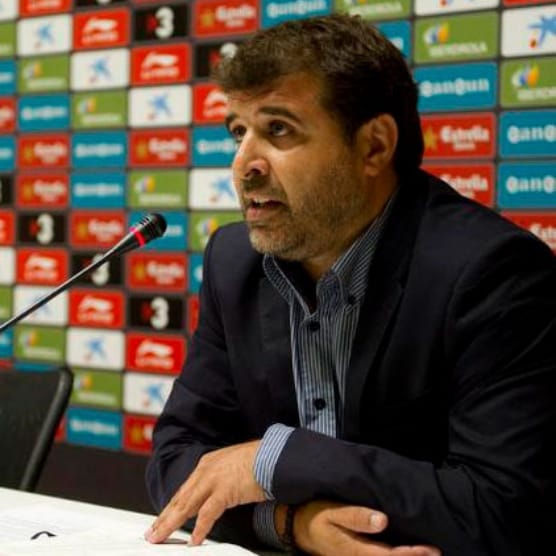
Óscar Riera – CEO of Rierasport
Former International Director at RCD Espanyol de Barcelona and University Lecturer
Bachelor’s Degree in Sports and Health Sciences (University of Barcelona)
Current Physical Education Teacher and former
Experience: 35+ years in elite football management and player development
Reviewed by: Lucas Riera – International Business Licensed
6+ years managing elite youth players and partnerships with LaLiga clubs
Frequently Asked Questions
Can I come with my parents?
Yes. We can advise on short-term accommodation for companions during initial adaptation.
What level do I need to join?
Experience in local competition plus videos for technical evaluation. Strong attitude and coachability can differentiate you.
Are there trials at professional clubs?
Yes. Top profiles access partner-club trials (e.g., RC Celta, Deportivo Alavés, Sporting de Gijón) depending on age/level and scouting needs.
Do I need to speak Spanish?
Not mandatory. Intensive courses and bilingual staff help, but learning basic phrases significantly speeds up integration.
How long before I can play official matches?
It depends on registration windows, documentation completeness, and fitness. With legal and federation processes completed promptly, players often compete within the first available registration period.
Extra Tips for a Smooth Transition
- Start visa prep early and keep digital backups of every document
- Conditioning focus: aerobic base + change-of-direction + hamstring strength
- Nutrition & sleep: performance and adaptation hinge on recovery
- Digital footprint: professional social media; clubs do check profiles
- Language: daily 15-minute Spanish practice boosts confidence
Start Your Journey
Ready to take the first step toward your professional career?